
Maltitol Powder
Maltitol Powder
Maltitol Powder
Product definition
Maltol (Maltitol solution, Maltitol Powder) is a food additive processed by liquefaction, saccharification, hydrogenation, refining and other processes.

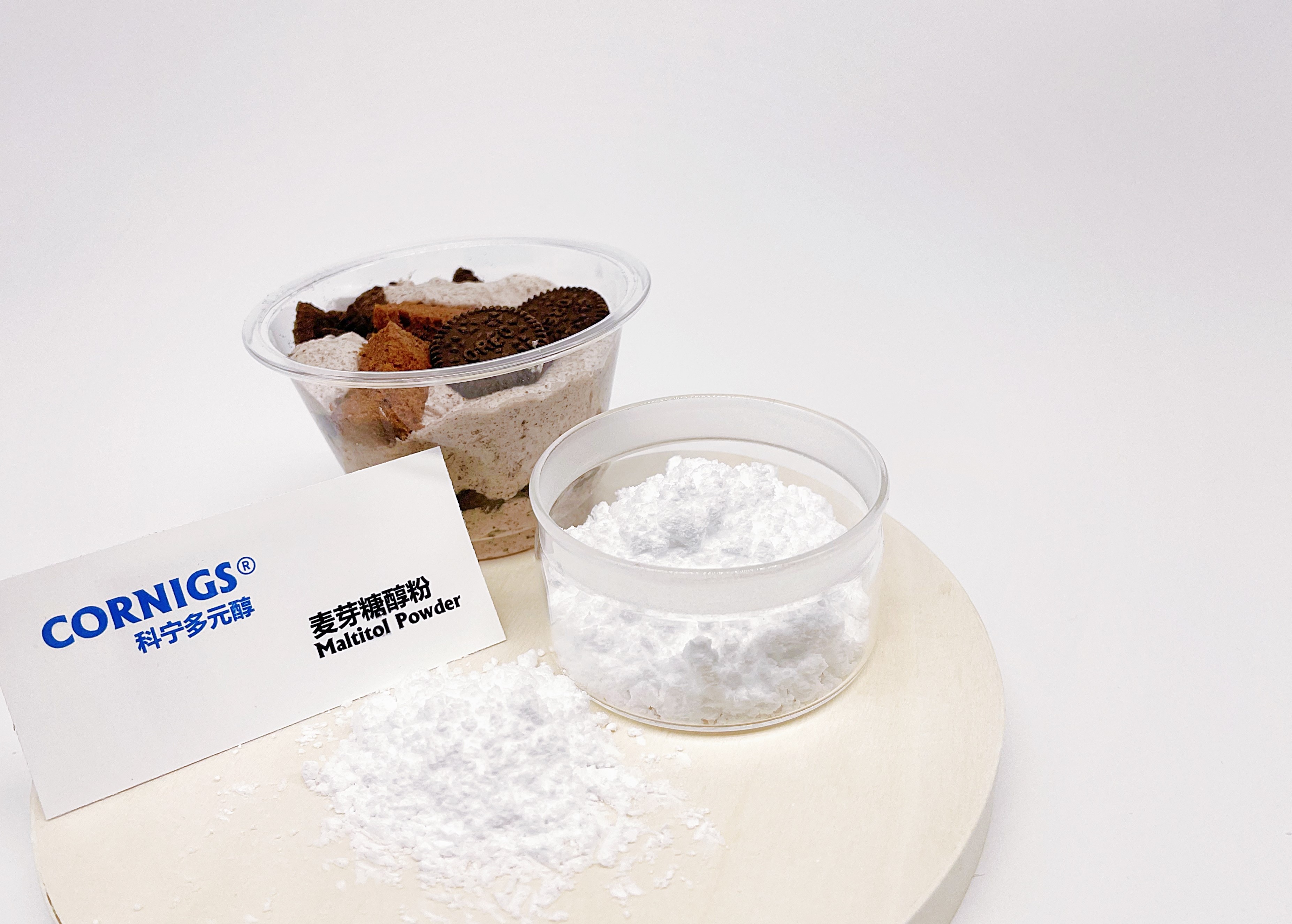
Maltol (Maltitol solution, Maltitol Powder) is a food additive processed by liquefaction, saccharification, hydrogenation, refining and other processes.
1. Do not raise blood sugar, and do not stimulate pancreatic islet secretion. When maltitol is consumed, blood sugar does not rise rapidly and does not stimulate islet production, which is an ideal sweetener for people with diabetes or liver disease.
2. Maltitol is not used by oral microorganisms (such as S-mutator streptococcus) and has good non-cariogenic properties, so it can be used to process sugar-free candy, so that children and adults can eat it.
3. When maltosol and fat eat together, the excessive storage of human fat can be inhibited. The presence of insulin improves the vitality of lipase (LPL) and promotes the storage of excessive fat in animal adipose tissue. Because maltitol does not stimulate insulin secretion, maltilitol and fat eating together can inhibit fat storage.
4. Promote calcium absorption. Takasc, Coda et al used rats to determine the absorption effect of maltol. The results showed that rats fed with maltilitol showed a significant reduction in calcium excreted in the feces, suggesting that maltitol improves calcium absorption and retention. Therefore, it can be used in high-calcium yogurt food.
5. Maltitol is relatively stable to heat and acid, and its viscosity is 2 times larger than that of xylitol and sorbitol. The freezing temperature and soaking pressure are also relative to sucrose, so it can be widely used in sugar-free fillings and sugar-free foods.
Integrating R&D, production and sales, not a trader, more competitive price and stable supply.
Certified by ISO 9001, FSSC 22000, Halal, Kosher, etc., with perfect quality control system.
Has an independent R&D center, can customize specifications according to customer needs, and provide technical support and application solutions.
Annual capacity exceeds 300,000 tons, regular products are in stock, and large orders can be produced and delivered quickly.
More than 20 years of foreign trade experience, familiar with import regulations and customs clearance processes of various countries, one-stop export service.
One-on-one service, full follow-up from inquiry, sampling, order placement to after-sales, response within 2 hours.
Nonproprietary Names: maltol
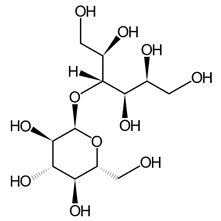
Chemical Name: 4-O-2-D-ethylene glycol pyranosorbitol
INCI Name: MALTITOL
INCI Number: 04580
CAS Registry Number: 585-88-6
EINECS Registry Number: 209-567-0
Molecular Formula: C12H24O11
Molecular Weight: 344.31 g / mol
Structural Formula:
|
apparent condition |
Colorless clear liquid / white powder |
|
Maltitol content, w /% |
50.0/98.0 (measured as dry base) |
|
sorbic alcohol,w/% |
≤8.0 |
|
moisture content,w/% |
≤32.0/ 1.0 |
|
Reduced sugar (in glucose), w /% |
≤0.3/0.1 |
|
Total sugar (measured in glucose), w / |
≤8.0/4.4 |
For specific product specifications and MSDS, please contact the product manager.
Our product managers are ready to provide exclusive solutions for you and support sample delivery.
Packaging: 275kg / barrel, 1300kg / barrel, loose water; 25kg / bag, 20kg / bag
Storage conditions: should be stored in a ventilated, dry,
cool warehouse, should be fire prevention.
Shelf life: 2 years (not unsealed).
The shared page covers both forms, so the ordered grade must be identified by physical form and its applicable table column. Do not apply liquid-form moisture or composition values to powder.
Check the dry-form entries for appearance, maltitol content, moisture, sorbitol, reducing sugars, and total sugars. Confirm every method and limit against the controlled grade specification.
Assess sweetness profile, dissolution, crystallization, texture, water activity, process tolerance, and storage stability against the existing sweetener system. Retain both acceptable and failed trial conditions.
Use the actual pH, temperature, residence time, solids level, and cooling path from production. Track color, flavor, viscosity, and analytical change over the defined shelf-life study.
Provide the food category, target sweetness and texture, process sequence, serving market, labeling constraints, and required documents. Confirm health or regulatory claims independently before publication.
Fill in the form below or scan the WhatsApp QR code, and the product manager will reply within 2 hours.
Scan QR Code to Chat Immediately

Scan with WhatsApp
Working Hours: 8:00-18:00 on Weekdays
Get Detailed Quotation
Welcome to Visit Our Factory
